Saturday, June 21, 2014

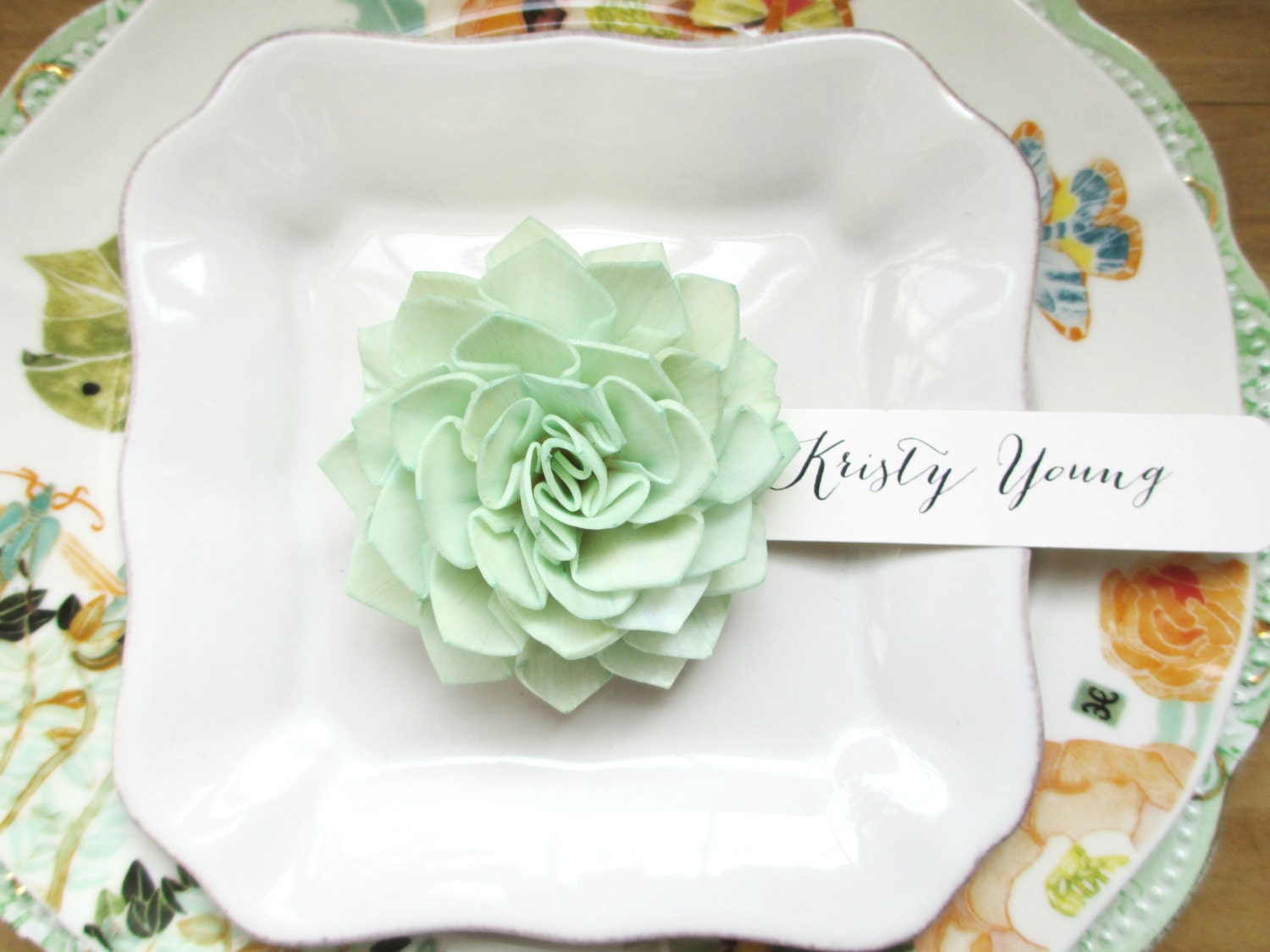
All About Escort Cards...and How They Are Not Place Cards!


You want your well-planned wedding to flow easily, right? We do, too! You are about to learn everything you need to know to help your guests find their table, their seat and start the reception off without unnecessary logistical hiccups. And we have a few creative tips to pass along, too...

Escort cards and place cards: did you know that they are actually two different things with two different uses? Many people reference them interchangeably, though. Don't make this rookie wedding planning mistake! Escort cards "escort" your guests to their table, while place cards "place" your guests at their actual seat. Escort cards are usually a necessity if your guest count is 30+. Place cards alone can be used for more intimate weddings, and be used in combination with escort cards at larger weddings.

Escort Cards are usually found in an area leading into the reception space, where guests find their names in alphabetical order to discover which table will be theirs for the evening. We don't recommend putting escort cards out at the beginning of the cocktail hour if possible. Many guests will feel the need to pick their card up right away, and then proceed to leave it in the bathroom or on the bar while ordering their glass of Chardonnay.  If there is a space for the escort card table right before entering the reception, it is best placed there. Otherwise, be sure that someone has a seating chart to assist those guests who misplace or lose their card during cocktail hour.

They are an essential for almost every wedding reception, so here are a few ways to get creative with them.

1. Make it edible or a wedding favor.

Not all escort cards have to be a “card.” They can be items, which your guests can take home as a keepsake. Some of the most popular escort card favors are soda bottles, jars of candy, cake pops, a signature drink, or picture frames. Having an item that is both a wedding favor and an escort card can reduce your overall budget (since you're getting two in one!) and add uniqueness to your wedding.              


2. Ditch the card and do one big chart.

Trying to save some money to put toward other parts of the wedding? Sometimes big charts are just as beautiful and effective as escort cards. You can either do a list of names with numbers or a diagram of each table with guest names. Although not as traditional as cards, this is a great idea to break the norm and cut costs. 
                             
3. Vary the way you display the cards.

If you want to go with the traditional escort card, you can vary the way you display the cards to add some ingenuity to your reception. Rather then displaying the cards on a table, you can attach the cards to a ribbon tapestry, put them inside of a picture frame, or connect them to decorated boards. You can even spice up your table decorations by putting them on decorations to match your theme; colored stones, wooden blocks, or a bed of flowers. 


4. Go square (or octagon, or round, or rectangle)!

Changing the shape, size, color, or adding a holder adds spark to an escort card. By using a seashell, an elephant, or flower to hold the card, you can tie in your theme while making the cards stand out. You can put the cards in envelopes, make them into little booklets, or form them into chairs to add dimension to your card table.


Sunday, February 16, 2014

Destination Series: Honeymoon Planning

Furama Resort & Spa -- Da Nang, Vietnam
[Photo taken by Kha Thai Vo | All Rights Reserved © April 2008]

The main focus of any couple’s special day is of course the wedding itself.  And considering all of the choices, decisions, and logistics that need to be determined, the whole process is more like a Hollywood production that can often times feel overwhelming.  So it’s no wonder that the norm is to hire a wedding planner to take care of all of the details and behind-the-scenes tasks to ensure that your ceremony and reception go smoothly.   

But what about your honeymoon?  

Have you carved out some time in all of your busy wedding planning activities to figure out where you will take your first vacation together officially as husband and wife?  Perhaps you have a general sense of where you’d like to go or the kind of honeymoon you’d like to have (i.e. adventurous, relaxing, luxurious, etc.), but just sifting through the mountains of information out there on the Internet is daunting.  From TripAdvisor to Jetsetter, there is an endless supply of opinions, travel tips, and travel photos to be reviewed.  And once you’ve done all of this (if you’ve done all of this), you still have the tedious task of booking everything yourself.  But what if I told you that you can have someone else, a travel expert, do all of the destination research, price scenario comparisons, and booking for you completely for free?!  Sound too good to be true?  Well it’s not!  

Erg Chebbi -- Sahara Desert -- Merzouga, Morocco
[Photo taken by Kha Thai Vo | All Rights Reserved © April 2012]
 

Many travel agencies (yes, they still exist) work off of commission, which is paid to them by the hotel directly, so they don’t charge you a fee for their services.  And because they are able to negotiate discounted rates with the hotels, it’s a win-win for everyone!  While it can certainly be a fun and rewarding experience to read all the reviews and look through candid traveler photos, not everyone has the time for that.  This often results in overpaying for hotels or things going wrong because of limited planning or uninformed decision-making.  While blind-bookings on German Wings or other travel web sites can be a fun and spontaneous experience, would you really want to take any risks when it comes to having your dream honeymoon come true?

At HJ Planners, our resident travel expert and Managing Director of Global Operations at HJ International, Kha Thai Vo, will take the time to consult with you and review all of your likes and dislikes for an ideal honeymoon.  Whether you would prefer to spend your honeymoon skiing in the Alps or snorkeling in Bora Bora or riding camels in Morocco or simply just relaxing on the white sandy beaches of St. Lucia, Kha will research everything and find you the best pricing options for your honeymoon dates.  And once you’ve decided on a destination, she will book everything for you AND write you up a very detailed and customized travel itinerary.  With over 30 years of travel experience in over 40 countries, chances are she will even have all kinds of personal travel tips and recommendations if you end up honeymooning somewhere she’s already been!

Silvretta Samnaun --Ischgl, Austria
[Photo taken by Kha Thai Vo | All Rights Reserved © February 2013]
Ask your wedding planner to introduce you to Kha or feel free to email her directly at kha@hjplanners.com.  Our honeymoon planning service is included in our full planning package, and is available at a nominal fee our partial planning and day-of package couples.

Erg Chebbi -- Sahara Desert -- Merzouga, Morocco
[Photo taken by Kha Thai Vo | All Rights Reserved
© April 2012]

Monday, January 27, 2014

Bring on the photos!

-->
Most couples hire a photographer to capture the moments of their special day. Some couples take this desire to capture everything a step further and rent a photo booth.

Photo booths are typically a major attraction for guests: they’re entertaining and provide mementos of the evening, especially if a guest manages to pull one or both newlyweds into the booth. However, choosing a booth isn’t as simple as deciding that one is wanted. Due to increasing interest in these booths, manufacturers and rental companies have created a variety of types, giving couples several options from which to choose.

In general, there are two main types of booths: open and closed. An open booth has no walls, while a closed booth does.

  • A closed booth typically allows only 3-5 people inside, while an open allows much more.
  • The background of a closed booth may not be easily changeable.
  • A closed booth may produce double photographs, one for individuals in the photo and another for the couple. 
  • Depending on what the vendor offers, both types of booths can provide two copies printed images, one for individuals in the photo and one for the newlyweds. Some booths even create online galleries for the couple to peruse after the reception. 

Open booths come in one main form: “walls free”. This type of booth consists of a camera trained on an area designated by the couple. The area usually contains a background that may be changeable during the reception. Sometimes, this type of booth is called a “studio style” booth.

There are more types of closed booths available. A closed booth can be constructed of a hard shell, like a traditional booth, or a soft shell, meaning made of curtains or another fabric or structure that is created specifically for the event.
                                                                                    
Antique booths: this booth not only creates black and white images, but also looks antique itself, displaying rounded edges adorned with art deco décor and porcelain doors and seats. It typically produces black-and-white images, but at a much faster pace than would an actual 1960s booth.

Digital booths: these photo booths contain a camera that shows photo-takers the image they’re going to create. This option allows for adjustment before taking the photo, meaning that nobody is left out of the picture.

Slideshow booths: these booths may be hard or soft-sided. In addition to creating a printed photo, they boast an LCD screen outside so that other guests can view the image being created inside. They offer a fun way for every guest to get a peek inside the booth.

When choosing your photo booth, consider:

The size of the space: each type of booth has a different shape and dimensions. Identify exactly where you want the booth placed and ensure that the one you choose will fit in that area.

The visibility of the booth: don’t waste the booth’s rental fee by hiding it in the corner. Make sure that guests can both see and have ready access to the booth at all times during the reception, and possibly the cocktail hour.

Your wedding’s feel and décor: match the booth’s appearance and the photos it creates to your wedding. For example, an antique booth will look out of place in a modern wedding and create images that don’t mesh well with your décor or other photos.

The length of your reception and typical booth rental time: many booths are rented on an hourly basis. Not renting a booth for the same amount of time as your reception means having it removed in the middle of your reception. This not only causes a commotion (booth are rather large and bulky and require several men to move), but might also leave some guests disappointed because they missed their opportunity to partake in the fun.

Additionally, we recommend:

  1. Viewing the actual photos the booth will produce. Don’t just take the vendor’s word for it; see what you’re purchasing.
  2. Inquiring into available props. Guests love using hats, fake mustaches, and glasses in their photos. Don’t assume that a booth comes with these extras. Ask what is available and if props are included in the rental price.
  3. Asking about the company’s licensure and insurance. Closed booths are electronic machines and quite heavy, thereby carrying a risk of injuring someone. Additionally, some venues require that all vendors be insured. Check into this early to avoid problems later on, after you’ve already made a deposit.

Happy photographing!

Monday, January 20, 2014

Dressing Your Tables


You’ve dressed yourself, your fiancé, and your bridal party. You’ve most likely also had input into what your parents wear. One think you might have overlooked, however, is what will adorn your tables.

The tables? Yep!

Unless you are using glass or tables that are fantastic in and of themselves, you most likely need to select linens to adorn your reception. Selecting linens, however, is no simple or easy task, mainly because of the variety of available colors, styles, and textures. Keeping all your options straight is challenging, but mixing and matching linen colors and textures can be downright mind-boggling.

A Few Linen Types


Shantung: this fabric is made of raw silk, has sheen to it, and is similar to Dupioni silk. However, it has less slubs (irregularities), making it smoother, and is slightly thinner, (although still a medium-weight fabric) than Dupioni.

Rosette: this satin fabric is composed of ribbon cuts in the shape of a spiral pattern, creating the look of rosettes.

Satin: this ultra-shiny fabric is smooth and somewhat heavy.

Taffeta: heavy, smooth, and plain, this semi-shiny fabric can be made of silk or rayon.

Brocade: this fabric is “embossed”, meaning adorned with weaving in addition to the fabric’s main components. The embossing is usually raised and the fabric rather stiff.

Damask: like brocade this fabric is embossed, but the embossing is usually flat. It can be made of linen, cotton, rayon or silk.

Lace: lace is lace is lace, albeit with different patterns, heaviness, and textures. Lace usually looks best when layered over other fabrics.

Some Fabric Styles and Patterns


Many fabrics come in different patterns, giving you even more choices. Linens containing dot prints, ribbon embellishments, and sequins are pretty self-explanatory, but other options include: 

Pin-Tucked: small seams are sewn throughout the fabric, usually in a square pattern. This type of adornment is often found on taffeta and cotton fabrics.

Shimmer: these fabrics include a sparkle or sheen that makes them shine in and sometimes reflect light. Shimmers range from subtle, with only a little bit of light-catching addition, to heavy, containing large wefts of fabric that catch the light.

Crinkle: a crinkle fabric contains non-uniform “wrinkles” throughout the surface. These wrinkles are soft despite being raised.

Basic Linen Sizes


Most linens come in multiple sizes (round, square, rectangular etc.) to match basic table sizes. However, varying lengths are also available, allowing for layering multiple linens with each being visible.

Using Multiple Types of Linens


Is your head spinning yet? Well, it’s about to start to spin faster, because you can use multiple types of linens in a single room!

Consider this, you don’t have solely one type of table in any given reception room – you’ve likely got ones of different sizes or, at the very least, that serve different purposes. Mixing and matching linens on tables makes the room more interesting, eye-catching, and serves the purpose of allowing you to indicate that some tables are special.

For example, consider using pin-tucked linens on your cake and gift tables, but use crinkle fabric linens on your dining tables. Another option is to adorn half your dining tables with damask and the other half with shantung. Rosette fabrics look great on escort card tables and match well with taffetas on cake tables.

And don’t forget about your sweetheart table! Nothing shouts “for the special couple” more than adorning a sweetheart table with linens not found anywhere else in the room.

How to Mix and Match


When mixing and matching linens, we recommend that you:

Not mix and match too many textures: tossing together rosette, crinkle, and pin-tucked linens can make a room look too busy and unconnected.

Stay within the same color scheme: the more types and styles of fabrics you choose to display, the more difficult it becomes to tie a room together. Sticking with colors that are similar or within the same color scheme helps reduce this problem.

Starting with one: when choosing linens, pick one that you like the most and place it in special areas around the room, such as sweet heart or escort card tables. Next, identify those tables that do not have linens and choose a fabric that compliments your first choice. Finally, add a third fabric to complete the rest of the room.

Don’t forget the other linens you’ll need: remember, you’ll still need to add other linens to your reception room, such as napkins. Napkins and other linens also usually come in many different textures and styles, allowing you to add in other linen types and styles without making a room overly busy.

Your wedding planner is the best resource when selecting linens. She’s more than familiar with and has memorized the different types of linens, styles, and patterns, and can recommend what will look best with your venue’s surroundings and the lighting you’ve chosen.

Monday, January 13, 2014

Ombre, Ombre, Ombre! Bring On The Ombre!

Fashion-forward brides do not only stay atop recent wedding trends, but also set trends. A trend we’ve recently seen instilled by this type of bride is the appearance of ombre.

Ombre is a tonal technique in which shades of color are graduated, usually light to dark. It mainly appears in fabrics, but can also appear in hair colors, ceramics, and lighting.

In weddings, ombre most frequently appears in fabric form, specifically in bridesmaid dresses. Commonly, these dresses display all the shades of the main color of the wedding.

So, why Ombre bridesmaid dresses? Well, there are several reasons:

It’s current but not over the top: ombre dresses offer brides a way to show off their and their bridesmaids’ style as well as pay homage to current fashion. However, ombre fabric patterns aren’t so in-the-now that they’ll end up dating a wedding. Wedding photos in which brides are wearing dyed shoes allow for easily identifying the wedding’s era; ombre dresses, on the other hand, have no such effect since using shades of color in a single dress has been done for centuries.

It’s dramatic without being daring: shades of color on a dress makes bridesmaids stand out, but doesn’t run the risk of being overly eye-catching and, therefore, distracting. This is because the trend isn’t completely new or unseen.

It’s readily available: ombre dresses are offered at most major retailers, making them easy to find and order regardless of where a bridesmaid lives.

It looks good in photos: ombre bridesmaid dresses show up well in photos because they’re intriguing, eye-catching, but do not overshadow the bride and groom. Often, they add texture and depth to photos.

It's interesting: although the trend for bridesmaids choosing individual styles of dress in the same color is not declining, the appearance of ombre dresses is gaining steam because each appears slightly based on the bridesmaid’s figure. Therefore, ombre dresses allow each bridesmaid to appear unique without each wearing a different dress.

It easily matches décor: a bride using shades of a color in her décor might not want to use only one color for bridesmaid dresses. Ombre dresses allow for carrying over the theme of shades of color into the bridal party’s attire.

It's relaxed but still formal: many ombre dresses tend to be long, making them suitable for formal weddings. However, they’re being trendy keeps them from being completely formal. Therefore, they are the perfect combination of formality and informality.


Our Recommendations


If you’re interested in ombre bridesmaid dresses, go for it! Our recommendations for doing so, however, include:

Use only one style of dress: the shifting of color is enough to make each bridesmaid stand out and catch your guests’ attention. Having multiple styles of dress adds too much variety and can make your bridesmaids attire look unplanned.

Consider your wedding’s venue and tone: ombre dresses are trendy and therefore may not be suitable for traditional or classic weddings.

Tie it in elsewhere: don’t stop at having only ombre bridesmaids’ dresses. Instead, consider having ombre appear elsewhere, such as in your lighting or in your cake’s decorations. This makes the ombre appear more deliberate. 

Tuesday, January 7, 2014

Let’s Dance the Night Away…After Taking Lessons!


Traditionally, there are numerous dances that occur at the beginning of a wedding reception: the father-daughter dance, mother-son dance, and – of course – the bride and groom’s first dance. These dances give guests a glimpse of the important people in the wedding, views of whom up to that time have been most likely limited to the walk down the aisle or short chats during the cocktail hour.

The problem is that most of us no longer dance, at least not formally. Moreover, unfortunately, when it comes to a wedding, the moves the bride and groom displayed at the recent U2 concert don’t count. This means that most brides and grooms, not to mention their parents and other members of the wedding party, are at a loss as to how to dance formally before a large group of people.

Don’t worry, we don’t recommend that you become a competitive ballroom dancer (although did you know that our President, HeatherSala, used to be just that?!) or that you encourage your bridal party or parents to do the same. What we DO recommend, however, is that you take some dance lessons.

Taking dance lessons doesn’t mean that you have to spend hours in a studio. One or two sessions might be more than enough to allow you to learn some basic moves and general choreography, or at least make you feel comfortable showing your stuff on the dance floor before your friends and family. Most of the time, studios recommend that you wear your wedding shoes and bring along your wedding song to the lesson so that you can acquire some real experience of what it will be like when you engage in that first dance.

You can, of course, take as many dance classes as you like, and we recommend that you do just that if you’re looking to nail down intricate choreography or moves. Remember, practice makes it more likely that you’ll be perfect!

Dance lessons aren’t just for you and your fiancé, however. In fact, we are seeing more parents and members of the bridal party joining brides and grooms in their lessons. This helps everyone acquire some basic dance moves, resulting in them feeling calmer when it’s their turn on the dance floor. Members of a bridal party planned to be called to the dance floor to join the bride and groom during the latter’s first dance might especially appreciate lessons.

Lessons don’t need to be taken individually. In fact, simply encouraging others to take lessons might not be enough of a push. The best alternative is to set up a group lesson and invite everyone in your bridal party and your parents. In this instance, it’s preferable for you to pay for the cost of the lesson, but if necessary you could ask people to chip in a small amount. You’ll increase the number of attendees to this lesson if you follow it up with a trip to a bar or restaurant. 

For dance lessons, we highly recommend Fred Astaire in Fairfax,Virginia. Not only do the studio’s instructors know their stuff (man, are they amazing to watch!), but they’re also more than able to assist even the most novice of dancers get their grove on. We’ve seen them turn quite a few non-dancers into agile movers. Our own destination wedding specialist and Managing Director of International Operations, Kha Thai Vo, is a student at the studio and can act as a point of contact for any couples interested in taking lessons.

You don’t need to bust into a Flamenco dance; there is, after all, no need to impress your guests. However, it is definitely comforting to feel as though you know what you’re doing when walking onto that shiny dance floor.

Monday, December 30, 2013

Bring on the food…TRUCKS!


The appearance of food trucks at weddings has not necessarily taken us by surprise, more like created joy in us. This is because food trucks pulling up alongside a reception space are, at the very least, welcomed with smiles and – usually – clapping. Therefore, when a bride or groom requests one at their wedding, we are more than happy to work to accommodate their request.

Why Food Trucks?

One reason why food trucks have become the rage is because of their relative ease in organizing. Since food trucks often only operate until about two on most days, their earnings are relatively steady and somewhat limited to what can be sold during their normal hours of operation. Typically, food truck owners are happy to drive their vehicles up alongside any reception location to earn the extra money that comes along with a special request.

Moreover, income from a food truck appearing at a wedding reception is guaranteed because most food trucks have a minimum that they charge. This guarantees that the appearance is worth the food truck owner’s time.

Food truck owners also know the city’s permitting requirements. Although acquiring a permit is the couple’s task, food truck owners can point them to where and who to ask for such a permit. They can also tell couples exactly what type of permit to acquire. However, the increase in food truck appearances at our weddings has also resulted in us having extensive knowledge about permitting issues.

How Food Trucks?

We recommend that food trucks appear at your reception after the main meal. Essentially, one of the best ways to use a food truck is as a late-night treat or even a sending-off (i.e., favor) gift. In this use, you send your guests home with full tummies and your guests receive a unique “thank you” for attending your celebration.

There are, of course, other times when a food truck can appear at your reception, but this is the main time that the appearance of a food truck is most appreciated and useful. The exact timing of its appearance depends on your reception hours.

We do not recommend that a food truck appear outside your ceremony location either before or during the ceremony. This just creates a mess and distracts from your exchanging your vows. It is, however, acceptable to use food trucks to supply your cocktail hour food. To provide a variety of appetizers, though, you usually must have multiple trucks.

What Food Trucks?

There really is no limit as to what type of food truck you can have at your wedding. Choosing the type of truck is similar to choosing what type of food to serve at your reception:
  • What do most people like to eat?
  • What options are available from a food truck? For example, is there a vegetarian option?
Our advice is to stay clear of anything in which the only option is very spicy. Make sure that what the truck serves is something appealing to the majority of your guests. Since dessert food trucks (cupcakes, pies, etc.) are also available, you could also offer your guests a late-night, sugary treat.

Happy Eating!